Homegofa: The Friendly Typeface for Engaging Kids' Content
If you've ever worked on a project aimed at children, you know the struggle of finding typography that feels both playful and functional. You need a font that captures attention without sacrificing clarity. Enter Homegofa, a member of the simple script family designed specifically for younger audiences. It’s not just another display font; it’s a purpose-built tool that balances whimsy with legibility, making it a standout choice for designers, publishers, and entrepreneurs in the children's market.
Understanding the Visual Character of Homegofa
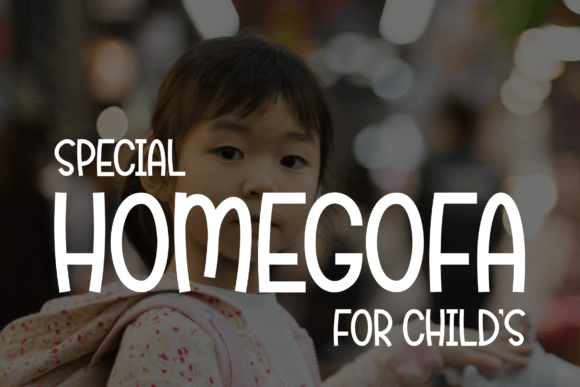
At its core, Homegofa is a handwritten font with a distinct personality. Unlike many script fonts that prioritize elegant, flowing strokes, Homegofa takes a different approach. The letterforms are intentionally thickened and simplified. This isn't about mimicking cursive; it's about creating a friendly, accessible typeface that feels familiar to a child learning to recognize letters. The rounded terminals and consistent stroke width give it a soft, approachable feel, steering clear of the sharp edges that can sometimes feel intimidating or overly complex for young readers.
The overall appeal lies in its warmth. It avoids the overly saccharine, cartoonish look that can quickly feel dated. Instead, Homegofa offers a modern typography solution that feels fresh and versatile. It’s a creative font that communicates safety, fun, and clarity all at once. This makes it an excellent asset for any project where you need to establish an immediate, positive connection with a family-oriented audience.
Where Homegofa Truly Shines: Practical Applications
The real value of a typeface is in its application. Homegofa isn't just for making text look cute; it’s a strategic design asset. Let's break down where this font works best and why.
Branding and Identity for Family-Focused Businesses
For entrepreneurs building a brand around children's products or services, logo design is critical. Homegofa provides a foundation that is instantly recognizable and trustworthy. Consider its use for:
- Children's Toy Brands: The font’s playful yet sturdy nature mirrors the durability and fun of well-made toys.
- Daycares and Preschools: It projects an environment that is nurturing and easy to understand, which is a key concern for parents.
- Kids' Clothing Lines: It adds a touch of personality to hang tags, labels, and marketing materials without feeling infantile.
Using Homegofa consistently across your brand identity—from your website header to your social media graphics—builds a cohesive and professional image that resonates with your target demographic.
Publishing and Editorial Design
In the world of editorial design, readability is paramount, especially for picture books and early readers. Homegofa excels here. Its clear letter shapes help emerging readers distinguish between characters, reducing frustration and encouraging engagement. It’s also a fantastic choice for chapter titles, pull quotes, or playful subheadings in parenting magazines or activity books. The font acts as a visual cue, signaling content that is meant to be enjoyed, not just processed.
Digital and Print Marketing
From packaging design for snacks and juices to signage for a local park or family tourist attraction, Homegofa carries its message clearly. On digital platforms, it performs well in short bursts for buttons, banners, and social media posts where you need to grab attention quickly. For print, its thick strokes ensure it reproduces cleanly at various sizes, whether on a small pamphlet or a large poster. It’s a versatile commercial font that adapts to both mediums.
The Strategic Impact of Choosing the Right Font
Typography is more than decoration; it’s a communication tool. The choice of font directly influences how your audience perceives and interacts with your content.
Readability and Visual Hierarchy: Homegofa’s design naturally creates a clear visual hierarchy. Its bold presence makes it ideal for headlines and key messages, drawing the eye immediately. When paired with a clean sans serif font for body text, you create a balanced, easy-to-navigate layout that guides the reader smoothly from one element to the next.
Brand Perception and Recognition: Consistency in typography builds trust. When a child (or a parent) sees the Homegofa typeface across different touchpoints—on a website, a product package, and a social media ad—it creates a sense of familiarity and reliability. This consistency is a cornerstone of strong brand identity, helping your business stand out in a crowded market.
Audience Engagement: The friendly, approachable nature of Homegofa can lower barriers to engagement. It feels less formal and more inviting than a standard serif font or a stark sans serif. For content creators and bloggers, using it in headers or featured images can make content feel more personal and accessible, encouraging clicks and shares.
A Practical Guide to Implementing Homegofa
Ready to incorporate Homegofa into your next project? Here’s how to approach it thoughtfully.
Evaluating Project Fit: First, ask if the font’s personality aligns with your project’s goals. Is your tone playful, educational, or nurturing? Homegofa fits these. If you’re designing a serious legal document or a luxury brand, it’s likely not the right match. Context is everything.
Testing Font Pairings: Don’t use Homegofa for everything. Pair it with a complementary premium font. A simple, geometric sans serif like Poppins or Lato makes an excellent partner for body copy. For a more classic feel, a legible serif font like Merriweather can work well. Always test your pairings in the actual context—on a mockup of your website or print layout—to see how they interact.
Reviewing Included Styles: Check what comes with the font license. Does it include multiple weights, like Regular and Bold? Are there additional glyphs or language support? Understanding the full package helps you maximize its utility across different applications, from a bold logo to a lighter caption.
Readability Considerations: While Homegofa is designed for clarity, always test it at the size it will be used. For very small text, a simpler sans serif might still be a better choice. Use Homegofa for display purposes—where its character can shine—and pair it with a highly readable font for longer paragraphs.
Understanding Licensing: If you’re using Homegofa for a client project or commercial product, ensure you have the correct commercial font license. Most premium fonts require a license for commercial use. Purchasing from a reputable source guarantees you have the legal right to use the font in your work, protecting both you and your client.
In the end, Homegofa is more than just a typeface; it’s a strategic choice for anyone creating content for children and families. It bridges the gap between playful design and functional readability, offering a tool that can elevate your projects from ordinary to memorable. By understanding its strengths and applying it with intention, you can create designs that truly connect with your audience.